 Back
Back
To help partners and growers better understand the technology behind Taranis, Customer Success Representative Cory Edge sat down with CTO Gershom Kutliroff to discuss how leaf-level AI works, how accurate it is in real-world conditions, and how field data ultimately becomes confident in-season decisions.
Kutliroff has spent more than 25 years working in artificial intelligence, beginning in computer vision, the science of teaching machines to interpret images the way humans do. Today, that foundation powers Taranis Leaf-Level AI, transforming drone imagery into precise agronomic insight across entire fields.
“Leaf-level AI… is about being able to understand the content of imagery.”
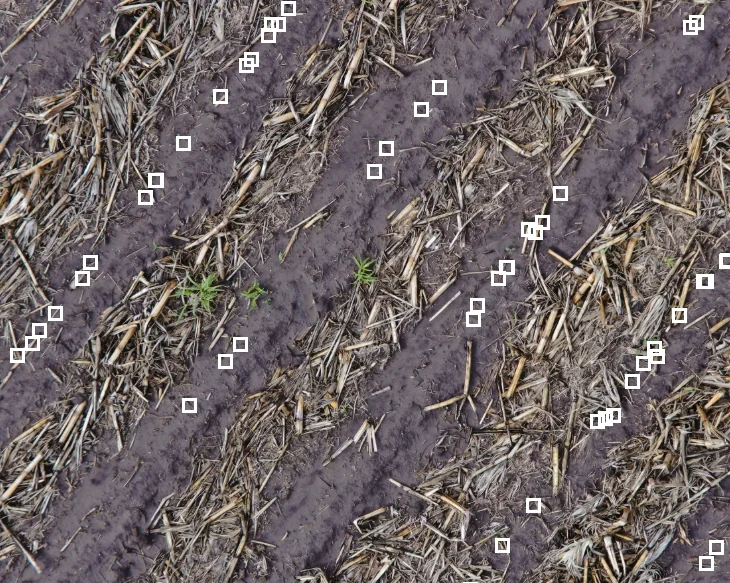
At Taranis, that imagery comes from drones flying across growers’ fields, searching for:
These insights create a complete, field-wide view—something traditional scouting alone cannot consistently deliver.
During the conversation, Cory asked a simple but critical question: What truly determines how well AI performs in agriculture?
Kutliroff’s answer was direct:
“What really determines the quality of your solution more than anything else is the amount of data that you have and the quality of the data that you have.”
After nearly a decade of field collection, Taranis has built one of agriculture’s largest agronomic image libraries—hundreds of millions of carefully tagged leaf-level images spanning crops, hybrids, geographies, growth stages, and environmental conditions.
That scale is what differentiates Taranis.
“Nobody has that kind of a rich database… which is why our AI models are really excellent at identifying what we’re looking for.”
What this means for agronomists and growers:
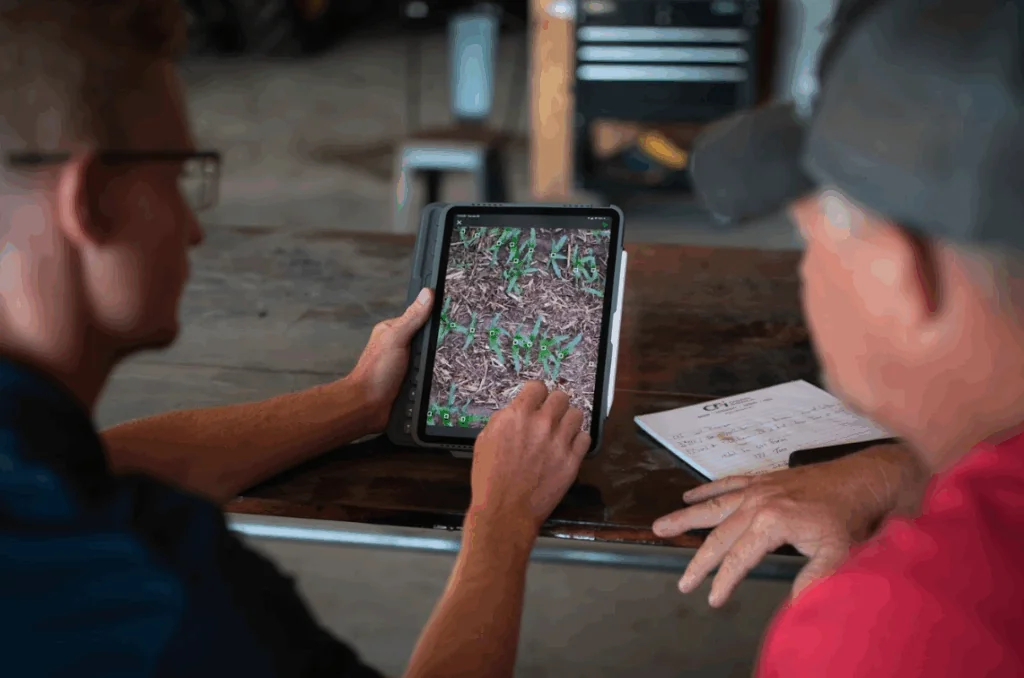
Another common question from partners and growers: Can AI really match human scouting?
Kutliroff compared AI learning to agronomic experience:
“As you see more examples… you get better and better at identifying those phenomena… That’s how you learn.”
Because Taranis AI is trained on vastly more field examples than any individual could encounter:
“The model does a really good job relative to… what a human expert could do.”
And unlike manual scouting, AI doesn’t fatigue or lose focus.
“The AI models have no problem with that… They’re going to notice every phenomenon on every image that people might otherwise miss.”
In practice, this delivers:
The purpose isn’t replacing agronomists, it’s equipping them with better information to act faster and smarter.
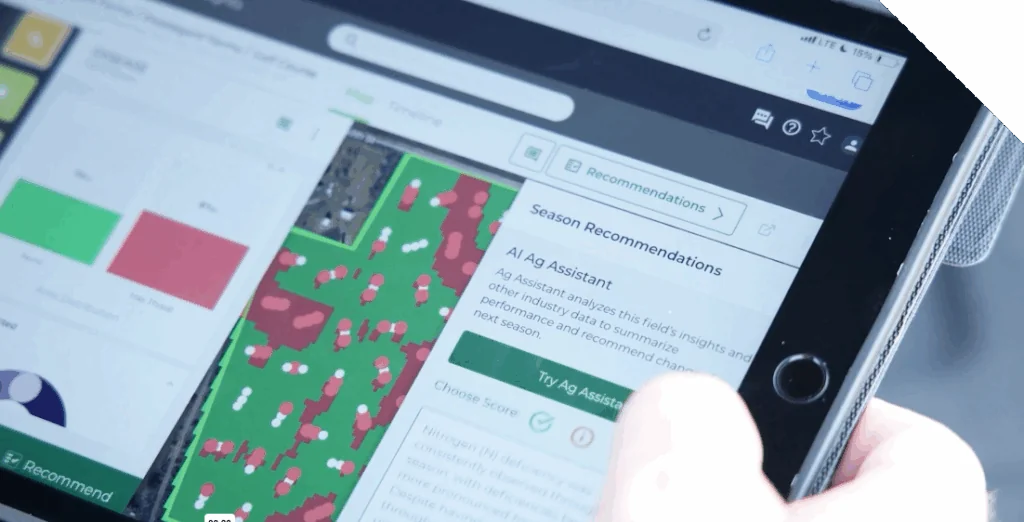
Finding an issue is only the first step. The real value is knowing what to do next.
As Taranis AI generated deeper layers of field insight, a new challenge emerged: helping advisors quickly interpret flights, history, weather, and agronomic context together.
Kutliroff explained how this led to Ag Assistant:
“We started creating a lot of data… and realized… we can actually go up another level… and present something which gives [agronomists] a much better idea of what’s really happening in the field.”
Ag Assistant synthesizes complex information into clear, usable guidance—saving time while strengthening in-season recommendations.
In many ways, Kutliroff noted, this reflects the original mission of Taranis:
“To do all of this… time-consuming work… to give agronomists and growers a good sense of what’s happening in their field.”
With Ag Assistant, that means:
Leaf-level detection delivers visibility. Ag Assistant delivers clarity. Together, they transform millions of data points into practical, in-season actionability.
And as Cory summarized in closing, when trusted insights are paired with agronomic expertise, growers gain something far more valuable than data:
Confidence in every decision across every acre.
Grower loyalty depends on strong recommendations. Learn how Taranis helps retailers drive better decisions with AI and leaf-level insights.
This is the first blog in a series where we will discuss AI technology and how to apply it to Precision Agriculture methodologies and how, ultimately, AI can take your farm to a new level of efficiency and prosperity.